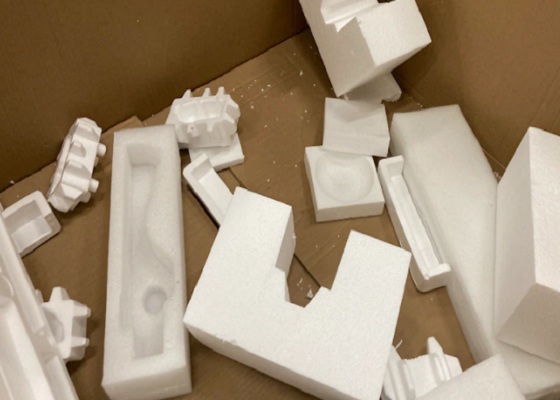
EPS (also known as polystyrene) is widely used in logistics, e-commerce, home appliances, furniture, and the seafood industry due to its light weight, strong cushioning, and thermal insulation. However, traditional disposal methods—mainly landfilling—consume large amounts of space and pose environmental risks. As a result, EPS recycling has become a key direction in global environmental policy.
1. Stricter Regulations: EPS Waste Management Enters a New Era
In recent years, many European countries and regions worldwide have introduced tighter regulations on plastic waste management, focusing on:
Reducing landfilling and increasing recycling rates
Several countries now restrict or ban EPS from entering landfills, pushing businesses to adopt more sustainable treatment methods.
Encouraging the use of recycled materials
Some industries are required to include a minimum percentage of recycled plastics, accelerating the growth of the recycled materials market.
Strengthening Extended Producer Responsibility (EPR)
Producers must take responsibility for packaging waste and build sustainable waste-management systems at the source.
Under these regulatory and market pressures, EPS waste is shifting from a costly disposal burden to a valuable recyclable resource.
2. EPS Recycling: Transforming Waste Into Reusable Materials
With proper equipment and processes, EPS can be efficiently converted into high-quality recycled material used in picture frames, decorative molding, flooring substrates, and other products, achieving true circularity.
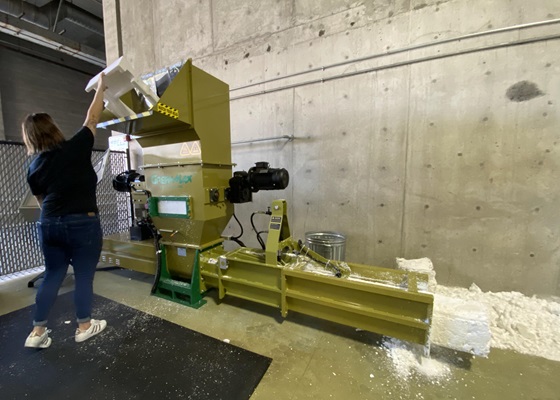
Among these technologies, the polystyrene compactor has become essential for efficient recycling.
3. Polystyrene Compactor: The Key Equipment for Policy Compliance
To meet regulatory requirements, lower waste-handling costs, and increase resource value, more companies are adopting EPS compacting technology.
An EPS recycling machine offers several advantages:
-
High reduction ratio: Compresses EPS to as small as 1/50 of its original volume, significantly reducing storage and transportation costs.
-
Wide material compatibility: Handles packaging foam, e-commerce returns, fish boxes, and industrial scrap.
-
Eco-friendly operation: Uses physical screw compression—no heating, no odor, no secondary pollution.
-
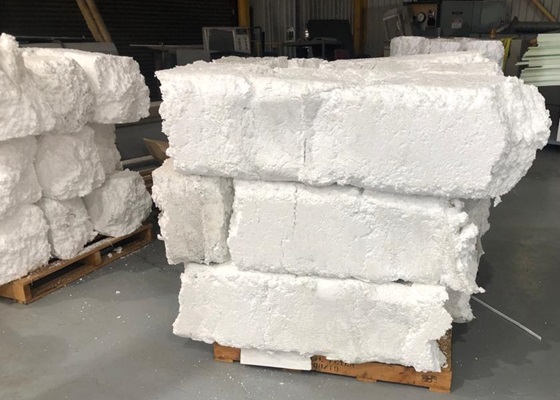
Waste-to-value conversion: Compressed blocks can be sold as poliestireno reciclado, creating new revenue streams.
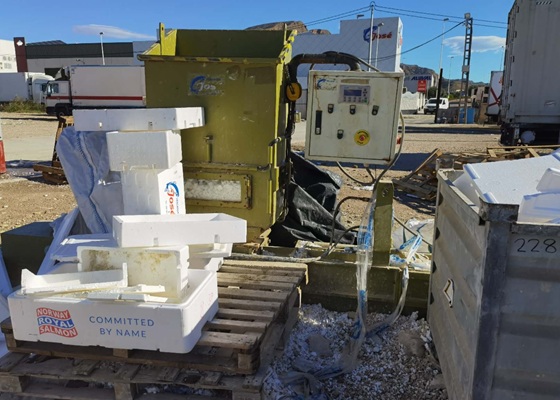
For coastal fisheries, seafood processors, and logistics warehouses—industries that use large volumes of foam—this equipment is especially critical for implementing EPS recycling.
4. Recycling Is No Longer a Burden—It’s a New Growth Opportunity
With tightening regulations and rising market demand, polystyrene recycling is evolving from a passive compliance task into a strategic advantage:
-
Reduced waste-management costs
-
Stronger ESG performance and greener brand image
-
Additional revenue from selling recycled EPS blocks
-
Compliance with regulations and avoidance of fines
Adopting a polystyrene compactor allows companies to build their own recycling system—achieving both environmental benefits and economic gains.