EPP foam is lightweight, impact-resistant, and suitable for repeated use. In the U.S. automotive industry, it is commonly used for door-system trays, electronic-component inserts, sensor carriers, seat-component dividers, and custom returnable packaging.
After a vehicle program ends or a part design changes, many EPP trays no longer match the new components. Packaging may also be removed from service because of damage, wear, or updated customer specifications. Although these materials weigh very little, they occupy significant floor and warehouse space.
In the United States, non-hazardous industrial waste is managed under the federal Resource Conservation and Recovery Act framework, while many waste-handling, reporting, and disposal requirements are implemented by state and local authorities. Packaging producer-responsibility programs are also developing in states such as California, Oregon, and Colorado, although their scope and treatment of industrial or transport packaging vary. Automotive suppliers should therefore confirm the requirements that apply in the state where each facility operates.
An internal EPP foam recycling system does not replace state or local compliance obligations. However, it can help a facility separate EPP from mixed waste, reduce its volume, document outgoing material more clearly, and prepare it for shipment to a downstream recycler.
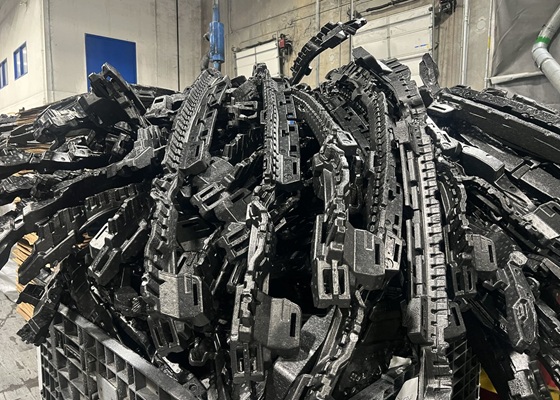
1. What Types of EPP Waste Are Generated by Automotive Companies?
EPP waste generally comes from two parts of the automotive supply chain.
Manufacturers of molded EPP products generate startup scrap, trimmings, rejected parts, and cutting waste. This material is usually clean and relatively uniform, making it well suited for EPP foam recycling.
Tier 1 and Tier 2 automotive suppliers typically generate:
- obsolete returnable transport trays;
- damaged protective inserts;
- positioning components and dividers;
- packaging for discontinued vehicle programs;
- trays that no longer fit redesigned parts.
These items are often large, thick, or made from higher-density EPP. Effective shredding is therefore required before compaction.
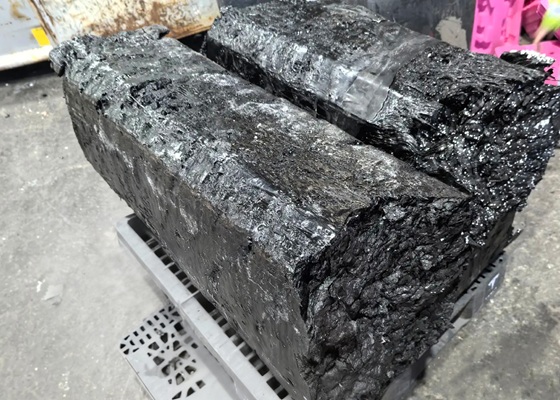
2. Why Is Hauling Loose EPP Expensive?
The main problem with loose EPP is volume rather than weight. A dumpster, trailer, or roll-off container can fill quickly even though the actual material weight remains low.
As a result, facilities may face ongoing costs for:
- frequent waste pickups;
- warehouse and production-floor space;
- manual handling;
- internal material movement;
- outside hauling and disposal services.
Some recyclers may charge for pickup or decline loose EPP because the low weight per truckload makes transportation uneconomical. Even when the material has recycling value, the cost of moving it in loose form can exceed its potential recovery value.
Shredding EPP and storing it in bags or gaylord boxes provides only limited volume reduction. The pieces remain lightweight and resilient, and they can expand or shift during storage.
A foam compactor combines shredding and continuous compression. Instead of loose packaging pieces, the system produces dense blocks that are easier to stack, weigh, store, and ship.
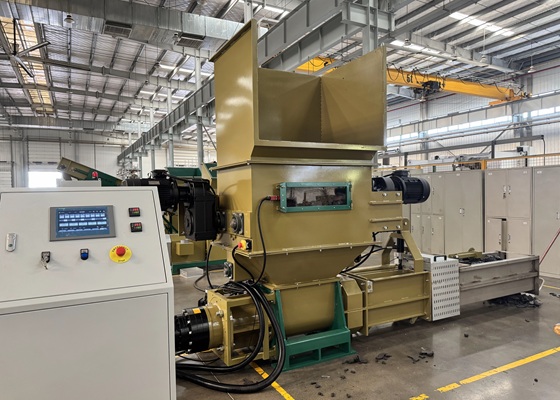
3. The GREENMAX Solution for EPP Foam Recycling
The GREENMAX ZEUS series is designed to shred and cold-compact EPP and EPE foam.
Obsolete trays and protective inserts are loaded into the hopper. The shredding system reduces large molded parts into smaller pieces, which are then transported and compressed continuously by a screw.
Controlled surface fusion helps stabilize the finished blocks and limits expansion after discharge. Depending on the density and structure of the material, the foam compactor can reduce EPP volume by up to 50:1.
Machine selection should be based on more than rated throughput. Automotive suppliers should also consider:
- the maximum dimensions of the packaging;
- foam density and wall thickness;
- daily or monthly waste volume;
- available operating hours;
- installation space;
- available electrical service.
GREENMAX Z-C100
The Z-C100 is suitable for automotive component plants, EPP packaging manufacturers, and regional collection facilities with moderate material volumes. Its processing capacity is approximately 100 kg, or 220 lb, per hour.
GREENMAX Z-C200
The Z-C200 is designed for larger Tier 1 suppliers, centralized logistics operations, and plastic recycling companies. Its processing capacity can reach approximately 200 kg, or 440 lb, per hour.
For thick, rigid, or high-density EPP packaging, the foam compactor can be configured with a more powerful or two-stage shredding system. This allows employees to load larger trays without cutting them into smaller pieces by hand.
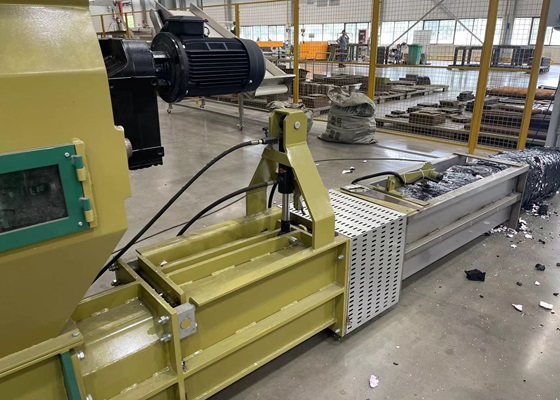
4. What Changes After EPP Is Compacted On-Site?
An on-site foam compactor allows facilities to process EPP shortly after it is generated. Obsolete packaging no longer has to accumulate near production lines, loading docks, or warehouse aisles.
After shredding and compaction, the material becomes relatively uniform blocks that can be stacked in a designated storage area. The greater material weight per truckload improves transportation efficiency and reduces pickup frequency.
The main benefits include:
- less storage space required for EPP waste;
- fewer manual handling and internal transfer steps;
- fewer dumpster or trailer pickups;
- lower hauling and transportation costs;
- more efficient use of each outbound load;
- a more organized EPP foam recycling process;
- potential revenue from clean, separated EPP blocks.
Compacted EPP can be shipped to a downstream plastic recycler, where it may be shredded again and converted into polypropylene pellets for manufacturing other plastic products. The actual outlet and material value depend on cleanliness, volume, location, and local market demand.
Metal parts, wood, tape, labels, and other foam types should be removed before compaction whenever possible. Clean and uniform material is easier to market and process.
5. When Is a Foam Compactor Financially Practical?
Before investing in an EPP foam recycling system, a facility should collect the following information:
- monthly EPP waste weight;
- current number of pickups;
- cost per dumpster, trailer, or hauling service;
- dimensions and density of the packaging;
- labor required for handling;
- available machine operating time;
- potential value of the compacted blocks.
A basic financial calculation can be expressed as:
Savings on hauling and storage
+ revenue from compacted EPP blocks
− electricity, labor, and maintenance costs
= estimated monthly financial benefit
When an automotive facility consistently generates large volumes of EPP packaging and pays for frequent hauling, an on-site foam compactor can be more stable and cost-effective than continuing to ship the material loose.
Based on material photos, maximum dimensions, density, monthly volume, electrical requirements, and site conditions, GREENMAX can recommend an appropriate foam compactor and estimate processing capacity, potential savings, and the expected payback period.